If you have Medicare, you have probably noticed that the rules don't stay the same for very long.
Premiums and deductibles can change. Prescription drug coverage can change. Medicare Advantage plans can change their networks, costs, and benefits. Coverage policies can change. New rules can affect the services Medicare pays for—and sometimes the way you access those services.
It can be frustrating to keep up.
But there is something important every Medicare beneficiary should know:
You are not powerless when Medicare changes.
You have the right to understand what is changing, ask questions, challenge decisions that affect you, and—when Medicare is considering certain policy changes—submit your own comments directly to the government.
The key is knowing where to look, when to pay attention, and what to do when you don't agree.
Start by Paying Attention to Your Mail
One of the easiest ways to miss an important Medicare change is to throw away a letter because it looks like "just another insurance notice."
Don't.
If you have a Medicare Advantage or Medicare prescription drug plan, your plan sends an Annual Notice of Change (ANOC) each fall. This notice explains changes to your plan's coverage, costs, and other important features that will take effect in January.
This is not junk mail.
It is one of the most important documents you will receive each year.


When you receive your ANOC, look for changes to:
- Monthly premiums
- Deductibles
- Copayments and coinsurance
- Prescription drug coverage
- Provider networks
- Hospital networks
- Prior authorization requirements
- Referrals
- Covered services
- Maximum out-of-pocket costs
- Supplemental benefits
If something looks different, don't assume the change is insignificant.
Ask questions before January arrives.
Don't Wait Until You Have a Problem
Another important part of being an empowered Medicare patient is understanding that Medicare information is available before you need it.
The official Medicare website has information about coverage, costs, enrollment, rights, and changes to Medicare. You can also create a Medicare account to review processed claims and other information. Medicare also offers email updates about topics such as Open Enrollment and ways to save on healthcare costs.
And remember that Medicare Open Enrollment runs from October 15 through December 7 each year. This is the period when many beneficiaries can change Medicare Advantage or prescription drug plans, or switch between Medicare Advantage and Original Medicare. Changes generally take effect January 1.
Don't wait until December 7 to start reviewing your options.


But What If You Don't Like a Proposed Medicare Change?
This is where many people don't realize they have a voice.
When the Centers for Medicare & Medicaid Services (CMS) proposes certain new rules or policies, there may be a public comment period.
That means members of the public—including Medicare beneficiaries—can submit comments explaining what they think about the proposed change.
CMS says public input is considered when developing final regulations. Comments can provide information, evidence, personal experiences, or concerns about how a proposal could affect Medicare beneficiaries.
In other words:
You don't have to be a healthcare executive, physician, lawyer, or policy expert to participate.
You can be a Medicare beneficiary.
You can be a caregiver.
You can be a family member.
You can be someone who has personally experienced the healthcare system that the proposed policy may affect.
Your experience can matter.
Where Do You Submit a Comment?
For proposed federal regulations, public comments are generally submitted through Regulations.gov.
CMS provides instructions for finding rules that are open for public comment. One way to search is to go to Regulations.gov, select documents that are open for comment, and narrow the agency to CMS.
The important thing is to check the deadline.
A public comment submitted after the comment period closes generally won't have the same opportunity to become part of the formal rulemaking record.
And don't assume that sending an angry email somewhere will accomplish the same thing as submitting an official public comment.
If CMS is requesting comments on a proposed rule, use the official process identified in the proposal.
What Should You Say?
You don't need to write a 20-page legal brief.
In fact, a clear, specific, thoughtful comment can be more useful than an emotional message that simply says, "I don't like this."
Start by identifying the proposal.
Then explain:
1. What concerns you?
Be specific.
2. How could the change affect Medicare beneficiaries?
Explain the real-world consequences.
3. What have you experienced?
If you have personally experienced the issue, explain what happened.
4. What would you like CMS to do differently?
Don't just identify the problem. If possible, offer a reasonable alternative.
For example:
Instead of:
"This is a terrible idea and Medicare needs to stop doing this."
Try:
"I am concerned that this proposed change could create additional barriers for Medicare beneficiaries seeking timely access to care. Patients with complex medical conditions may already face delays when services require additional administrative steps. I encourage CMS to consider whether the proposed requirement could result in delays in medically necessary care and to evaluate alternatives that protect beneficiaries while still addressing the underlying concern."
The second comment is more specific, professional, and useful.
Your Personal Story Can Be Powerful—But Protect Your Privacy
If you submit a public comment based on your personal healthcare experience, think carefully about how much personal information you include.
CMS specifically advises that personally identifiable health information should not be included in public comments. Public comments can become part of the public record.
You can tell your story without publishing your Social Security number, Medicare number, date of birth, medical record number, or other identifying information.
For example:
Instead of providing your full medical history and identifying information, you might say:
"I am a Medicare beneficiary who experienced a significant delay in receiving a medically necessary service because of the additional authorization requirements."
You can explain the problem without exposing information that could identify you.
Your voice matters. Your private information doesn't need to be part of it.

Don't Underestimate the Power of a Well-Documented Complaint
There is another distinction that is important:
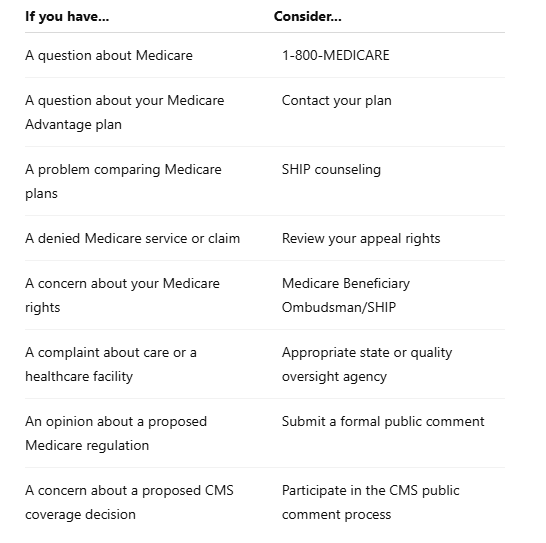
A policy comment is different from a complaint about your individual Medicare problem.
If you have a problem with your own Medicare coverage, billing, plan, or rights, you may need a different path.
For questions about Original Medicare, you can contact 1-800-MEDICARE (1-800-633-4227).
Medicare also recommends contacting your State Health Insurance Assistance Program (SHIP). SHIP provides free, personalized Medicare counseling and is not connected to insurance companies or Medicare health plans.
If you have a Medicare Advantage or prescription drug plan, your plan may be the appropriate first contact for certain questions or complaints.
And if you believe your Medicare rights have been violated or your concern hasn't been resolved, Medicare has additional resources, including the Medicare Beneficiary Ombudsman.
And Don't Forget About Appeals
There is another important way to make your voice heard:
Appeal.
If Medicare or your Medicare Advantage plan denies coverage for a service or treatment, don't automatically assume that "denied" means "the end."
Depending on the circumstances, you may have appeal rights.
Read the denial carefully.
Find out:
- Why was the claim or service denied?
- Was it denied because it wasn't covered?
- Was prior authorization required?
- Was the documentation considered insufficient?
- Was the service considered medically unnecessary?
- Was there a coding or billing issue?
- What is the deadline for appealing?
- Where should the appeal be sent?
- What documentation is required?
Then act.
A denial is a decision—not necessarily the final decision.
Speak Up, But Speak Strategically
Being an empowered patient doesn't mean calling everyone and demanding that they "fix Medicare."
It means learning how the system works and using the appropriate channel.
The goal isn't simply to complain.
The goal is to make sure your concern reaches the right place.

Make Medicare a Year-Round Conversation
Many people think about Medicare only during Open Enrollment.
But Medicare deserves your attention throughout the year.
Rules can change.
Plans can change.
Costs can change.
Coverage policies can change.
And proposed policies can create opportunities for the public to participate before a final decision is made.
You don't need to become a Medicare policy expert.
You just need to become an informed Medicare consumer.
Read your notices.
Ask questions.
Keep your records.
Understand your rights.
Challenge decisions when appropriate.
And when there is a legitimate opportunity to influence a proposed policy, use your voice.
The Empowered Patient Takeaway
Your Medicare coverage affects your health, your finances, and your ability to access care. That makes it worth paying attention. The next time you receive a Medicare notice, don't automatically file it away.
Read it.
The next time you receive a denial, don't automatically accept it.
Ask why.
And the next time you hear about a proposed Medicare change that could affect you or your ability to receive care, don't assume that someone else will speak up.
Speak up.
Being an empowered patient isn't about knowing everything. It's about knowing where to find reliable information, where to ask for help, and when your voice can make a difference.
And sometimes, the most important thing you can do for yourself—and for other Medicare beneficiaries—is simply to pay attention and speak up.